Finding Ourselves in the Fog of a Hundred Shades of Beige

Other Platforms Apple Podcasts | Spotify | RSS | More Destinations
If you’ve looked up stuff about the trait of high sensitivity online, you’ve probably been confronted by a sea of pastel colours and a hundred shades of beige. There’s nothing inherently wrong with those things. If that’s your bag, by all means fill it up. But other preferences are available, and I know a bunch of HSPs who keep their true colours hidden for fear of standing out too much.
A Sensitive Love of Horror Movies
I once wrote a post about my love for horror movies. Not the shock and gore types, but classic horror. The stuff that twists my melon, unsettles my relationship with reality, and leaves me thinking and trembling about it long after the credits roll. I fully appreciate that not everyone shares this particular proclivity, and that’s fine; I don’t expect them to. But I received a reply to that post from someone for whom this meant I couldn’t possibly be highly sensitive. And they really couldn’t grasp my suggestion that it is the very traits that come from my high sensitivity that spark my love of dark and mystery-filled art.
I’ve never been particularly attached to the highly sensitive label. Whether or not I fit into the club is not a concern because I’ve never seen it that way. But I found it interesting that they couldn’t understand what I was saying. I see a strong link because my sensitivity (deep processing and absorbing subtle details) is the fuel for my engagement with those depths. I love dwelling in mystery, especially the kind that doesn’t have a simplistic reveal or explanation.
Darkness and Definition
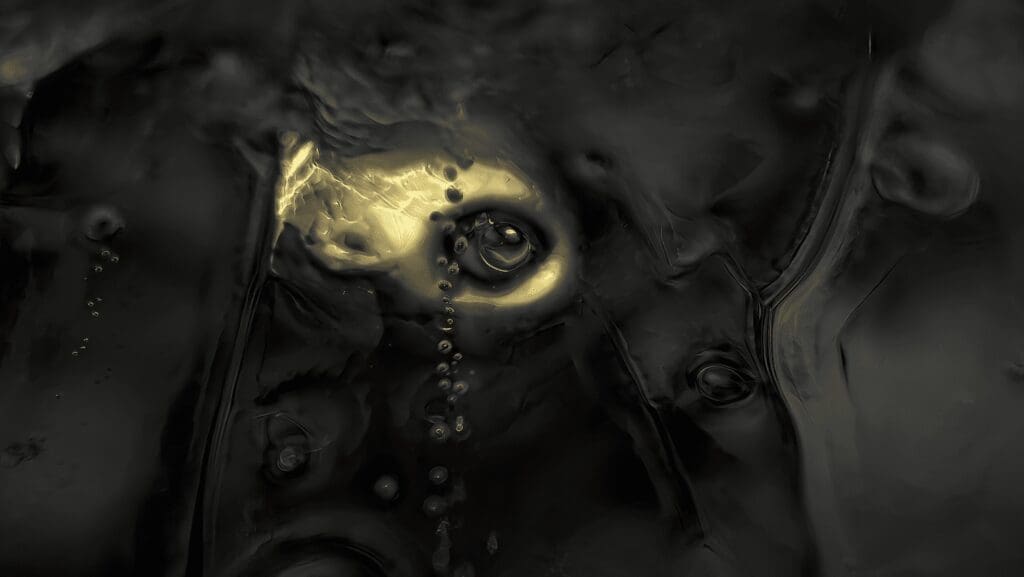
My friend Tuula Ahde creates the most stunning macro ice photographs. They’re dark and mysterious. Every observer gives a different meaning to the colours and shapes within the images. Faces, landscapes, memories, dreams. You notice the sounds, stories, and hidden worlds within the ice. I know that Tuula’s sensitivity underpins and infuses her photos, shaping how she perceives the world and expresses her unique creative voice. Yet, her work contrasts with the subjects and colours typically associated with a creative HSP.
I like music without a prescription for understanding it, and TV shows that avoid neatly tying every thread together. While part of me craves the pleasure of neat conclusions, clear interpretations, and full explanations of who the killer was and how the trick was done, the rest of me knows it’s far more enjoyable to dwell in the shifting landscapes of ambiguity beyond good and evil, conspiracies, and sinister motives. Towards something more chaotic. More complex and confusing. Dare I say, more human! An incomplete and contradictory picture filled with false-starts, miss-steps, and about-turns.
The tendency to hold and enjoy those elements reflects my personal experience of sensitivity. And I know I’m not alone. I suspect it is this pull towards life’s more complex realms that leaves me feeling empty when I see high sensitivity portrayed through pastel colours and a hundred shades of beige. The kind found in therapeutic spaces, at least many of those I’ve encountered. Where art on the walls is soft and pale, lacking backbone, as if they are afraid to speak. I rarely find sanctuary in these colours. Instead, I find fog, where there’s no edge or hook to hang my hat. Like the politeness and civility that mask the truth.
The Brightness of Fog
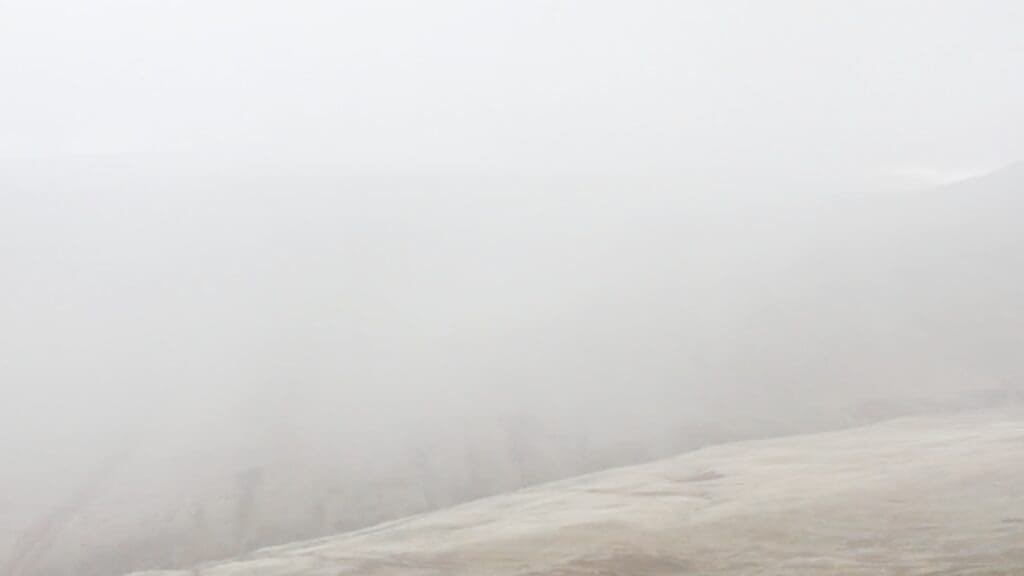
This pale pastel fog appears bright, yet it is opaque. It conceals rather than reveals, compressing itself around the world instead of adding dynamism and depth. When you shine a light into it, the light gets reflected back. It sees nothing.
Shining a light into the darkness reveals what lurks within it. Sometimes those things are hard to distinguish at first, but as our eyes adapt, we can see all sorts of things. A hundred shades of beige seem unassuming and bright, but they feel soulless and shallow. Lacking a defined edge. And if you’ve ever stood on a mountain in fog, you’ll know that brightness doesn’t equate to clarity. The edge could be just one step away or a hundred.
Working In Funeralcare
I noticed something similar when I worked in the funeral industry. Many people avoid discussing death, which is quite understandable. But not talking about something doesn’t make it disappear. I believe my sensitivity attracted me to that world. Not because I had a peculiar fascination with it, but because of the truth in it, which is often avoided, hidden, and whitewashed by euphemisms and shades of beige. We obscure the inevitable with platitudes and avoidance. Yet, there is creative energy to explore and harness in those realities we must face and accept, even as we resist and resent them.
When I hear people talk about keeping things positive or avoiding negativity, I am always interested to know what they mean. There are those who would rather an inoffensive pastel painting of a sunrise or idyllic pastoral nature-scape. But there is a risk of pacification and an inaccurate representation of sensitivity as something fragile and easily broken. Rather than a way of experiencing the world in all its magnificent and mysterious depth.
I love rich mahogany desks contrasted with dark green lamps and the orange flicker of candlelight. The shapes in shadows, whispers on the wind, and the scars, stains, and blemishes that hold stories. I like things that turn out to be more than they seem and invitations to explore. I like wondering about everything that happened here and wandering about on faded footprints. And I like the kind of surprises that take me along the trails, corridors, and tunnels that can’t be seen from the road.
How about you?