Exploiting Trust With Storytelling Frameworks

Other Platforms Apple Podcasts | Spotify | RSS | More Destinations
The moral of The Boy Who Cried Wolf is generally that liars aren’t believed even when they tell the truth. But I wonder if that story actually tells us less about the boy and more about the village.
The boy’s behaviour didn’t change. What changed was how the village responded. Each false alarm conditioned them to doubt what came next. Once that trust was gone, the villagers were living in a subtly created new reality.
That feels uncannily familiar right now.
In this episode of The Gentle Rebel Podcast, we explore the storification of everything and its impact on our ability to trust what we hear about almost anything.
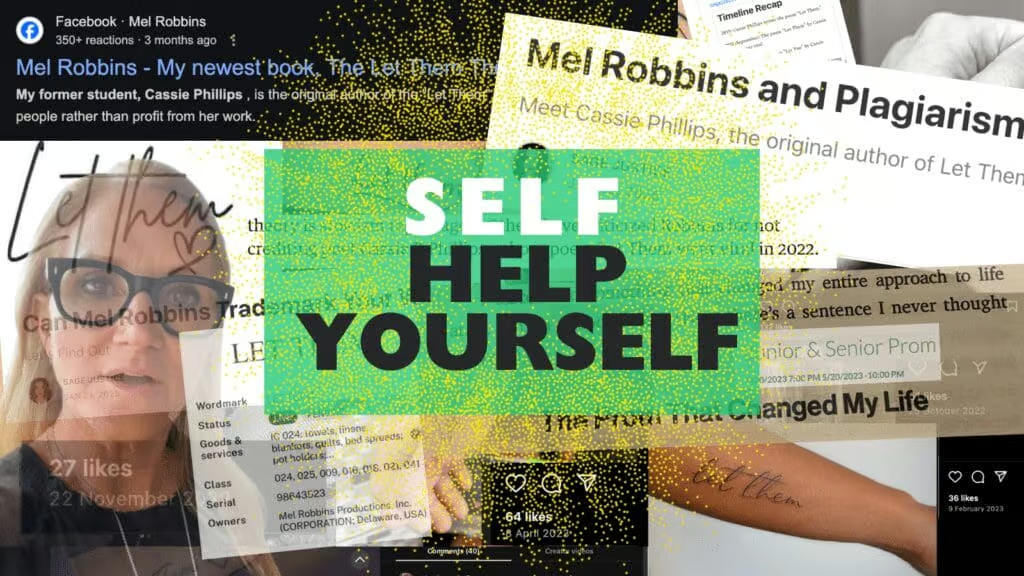
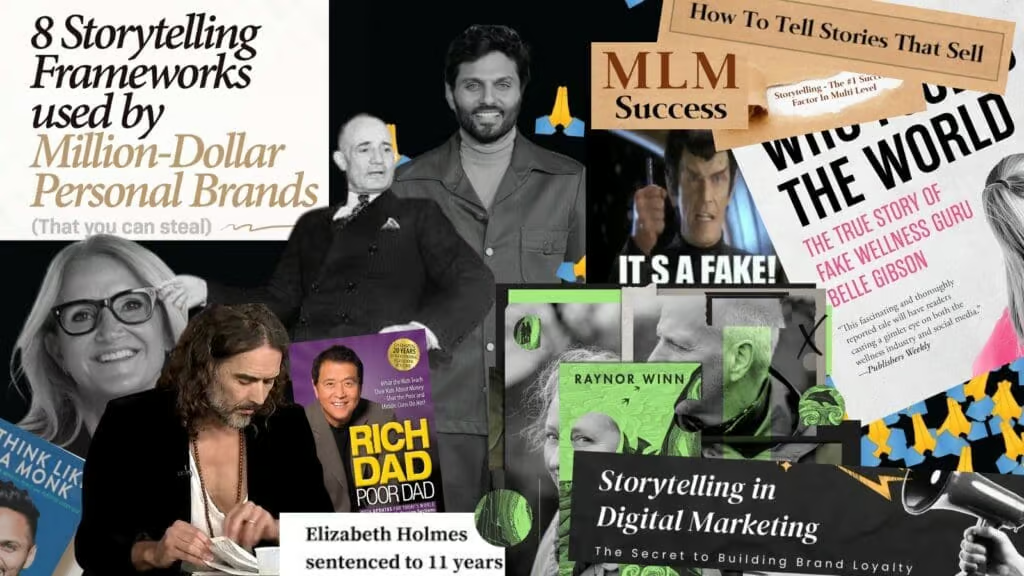
A while back, my attention was caught by an Instagram carousel titled “8 Storytelling Frameworks Used by Million-Dollar Personal Brands (that you can steal).” It might have been the image of Mel Robbins on the front cover that did it.
I love stories. Storytelling is a wonderful way to unlock our creativity and deepen our experience of humanity. But when I see storytelling packaged into marketing funnels with the aim not to tell better stories, but to become more persuasive and influential in shaping people’s behaviour, I feel a bit of the ick.
For me, the purpose of storytelling is to deepen empathy, compassion, and insight. There is nothing inherently wrong with a brand telling stories. What rankles me is when storytelling frameworks are used not to explore a truth but to manufacture one, with the goal simply to turn attention back to the storyteller and get people to part with their money.
The storification of influencers and brands may give us insight into why so many of us are starting to feel jaded, cynical, and tired.
The Fastest Way to Build Trust (and Destroy It)
In branding and marketing, storytelling aims to persuade people to take a pre-designated action. The Instagram post reinforced this, saying: “Storytelling is the fastest way to build trust online. It makes people feel like they know you, and people buy from those they know.”
But if this becomes disingenuous or dishonest, each fabricated story becomes another cry of wolf. We are naturally poised to trust, but we are also highly adaptable. If we are told enough stories that turn out to be untrue, it erodes our trust. We struggle to believe anything, even when it is real. Look at how many comments say “staged” or “fake” on videos that aren’t staged at all.
Storytelling may be the fastest way to build trust, but it can also be the fastest way to destroy it.
I include examples to show that this isn’t about whether storytelling frameworks work. I know they do. Rather, it’s about what happens when they are exploited. What happens to our faith and trust in what we hear and read in everyday life?
The Storytelling Frameworks
Here are the eight frameworks from that Instagram post.
- Before → After → Bridge – Show where you were, where you are now, and the specific bridge that got you there.
- Aha Moment – Tell the moment your perspective changed and the lesson behind it.
- Micro-Moment Story – Take a tiny, ordinary moment and extract a deeper truth from it.
- Mistake → Lesson – Share a mistake, then the lesson learned, and how it shaped your expertise.
- Enemy of the Hero – Define the villain your audience is fighting (fear, confusion, burnout) and position yourself as the guide.
- Scar → Skill – Reveal a vulnerable moment, then show the strength or transformation it built.
- From My Client’s Eyes – Tell a story from a client’s transformation, focusing on the emotional shift.
- Depth in 30 Seconds – Deliver a full story arc (tension, insight, outcome) in one punchy micro-story.
These eight storytelling frameworks are widely taught in marketing circles. But as I explore in the episode, each one can either deepen trust or erode it, depending on the intent behind the story.
What Can We Do About The Boy Who Cries Wolf?
We might think of ourselves as the villagers in The Boy Who Cried Wolf. Enough of the village is still responding in good faith to dishonest stories. But the more we permit and encourage these tactics, the more good faith will erode. We will assume nothing is true and wonder what the storyteller is trying to squeeze from us.
That is a bleak place to be, not least because we start writing off those who have taken the time to create honestly, as we cannot distinguish between truth and fabrication.
What are we willing to tolerate? What are we helping to amplify? How are we equipping and rewarding the cries of wolf?