Big Feelings and Big Joy as a Highly Sensitive Person (with April Snow)

Other Platforms Apple Podcasts | Spotify | RSS | More Destinations
What does it mean to live well as a highly sensitive person without turning sensitivity into another thing to optimise?
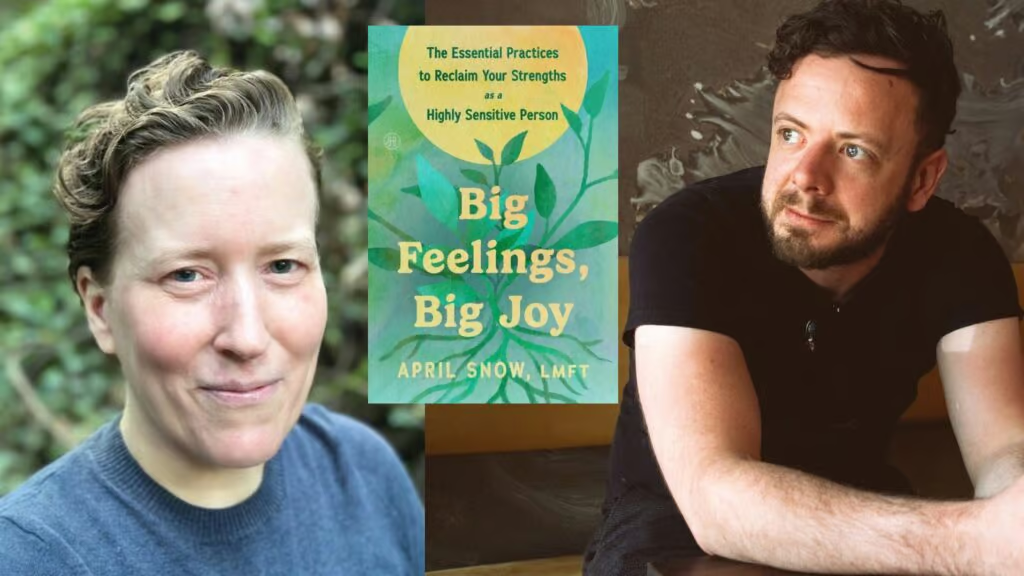
In this episode of The Gentle Rebel Podcast, I’m joined by psychotherapist and author April Snow to talk about her book, Big Feelings, Big Joy: The Essential Practices to Reclaim Your Strengths as a Highly Sensitive Person.
April discovered the language of high sensitivity while training to become a therapist, after years of wondering why she experienced the world so intensely. Since then, she has spent more than a decade working with HSPs and exploring what helps us find balance, make sense of our experiences, and create lives that work with our sensitivity rather than against it.
We talked about the positive aspects of sensitivity, the problems with some of the advice circulating through wellness and personal development culture, and the importance of giving ourselves enough space to notice what actually works for us.
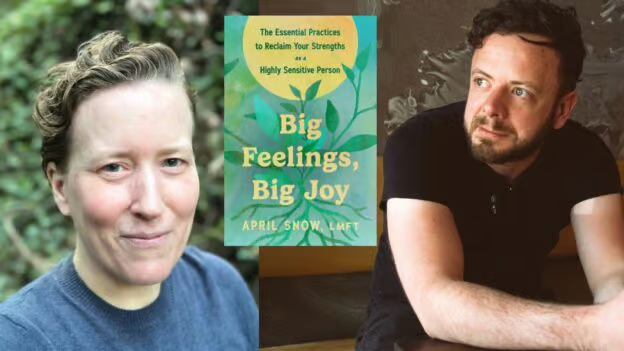
Big Feelings, Big Joy
In the episode, April describes her ORCHID framework, which offers a more human, positive way to describe the characteristics associated with high sensitivity. We discuss the difference between understanding sensitivity as a way of making sense of our experiences and turning it into a tightly defining identity.
The joy of creative sensitivity
Sensitivity isn’t only about being affected by difficult or overwhelming experiences. It can also mean experiencing music, art, awe, excitement and other positive experiences very deeply. This positive capacity is central to the title and approach of April’s book.
The pressure to optimise ourselves
We talk about the endless routines and protocols found in wellness and productivity culture, and why HSPs might want to be particularly cautious about turning self-care into another long list of things to get right.
Less can be more
April suggests that small changes can make a surprisingly large difference for HSPs. Rather than adding more practices to an already crowded morning, it might be more useful to prioritise one thing and let that be enough. Differential susceptibility shows that HSPs are more affected by our environment, which extends to the things we do as well.
Finding the counterbalance
We explore the idea that a healthy nervous system isn’t one that stays permanently calm. We need activation, stimulation and meaningful experiences too. The important thing is having enough flexibility to come back and re-regulate afterwards.
Transitions and the spaces between things
We talk about the value of giving ourselves time to move from one state or activity to another, rather than constantly switching gears. Sometimes the transition itself is where we need to slow down.
Making “no” a default answer, but not necessarily the final answer
April and I explore how an immediate “no” can sometimes be a default response to an invitation or new experience, especially when we’re tired or overwhelmed. Giving ourselves time before responding can create space to discover whether something is actually a no, a yes, or a “maybe, let me think about it.”
The importance of flexibility
Our energy and capacity aren’t fixed. We talk about leaving room in our plans so we can respond to how we’re actually feeling, rather than following a rigid schedule no matter what life brings.
Small pockets of joy as anchors
Because highly sensitive people may be more affected by both positive and negative experiences, small moments of joy, comfort and connection can have a powerful effect. April shares childhood memories that helped her stay grounded during harder times, and we explore how this might work in adult life too.
Creating a little sanctuary
Even when our wider environment is noisy, chaotic or simply not suited to us, we may be able to find small spaces or rituals that give us somewhere to breathe. Sometimes that might be a whole room; sometimes it’s a car, a park, a library, or five minutes of something that feels like ours.
Taking our time
We also talk about April’s experience of writing the book itself. If she were doing it again, she says she would spend longer at the beginning researching, reflecting and allowing the ideas to simmer before diving into the work. It’s a lovely example of applying the very principles she’s writing about to a creative process.
You can listen to the full conversation in this episode of The Gentle Rebel Podcast. I will also be exploring some of these themes in more depth in a series of videos.
Part One – A World-Expanding Discovery
Part Two – Is Your Personality Fixed or Flexible?
About April
April Snow, LMFT, is a licensed psychotherapist, author, and consultant. She specialises in working with highly sensitive people to help calm the storm of overload, guilt, and self-doubt to allow their innate sensitive strengths to shine through. Deeply committed to changing the narrative of what it means to be highly sensitive, April supports HSPs around the world through her Sensitive Circles community, Sensitive Sessions workshops, and Sensitive Stories podcast. In addition to Big Feelings, Big Joy she has written Find Your Strength: A Workbook for the Highly Sensitive Person.
April holds a Master’s Degree in Integral Counselling Psychology and is a Licensed Marriage and Family Therapist in California, where she lives with her wife. In her free time, she enjoys being at the beach, curled up in bed, on her yoga mat, spending quality time with her nieces and nephews, or seeing live music.