
Is Coaching Really a Pyramid Scheme?

Other Platforms Apple Podcasts | Spotify | RSS | More Destinations
With increasing regularity, I see posts on social media criticising coaching as a pyramid scheme or defending it against such accusations. As people tend to do, they paint a nuanced field with a very broad brush, whichever side they support.
In this episode of The Gentle Rebel Podcast, I discuss a recent argument I came across. It illustrates how the term ‘coaching’ is understood and used in two distinct ways.
“I’m not sure I’ll ever understand the ‘coaches teaching coaches to coach is a pyramid scheme’ situation. It’s literally not… I want to be coached on my business by a coach. Who else would I want to learn this from?!”
A Misunderstanding?
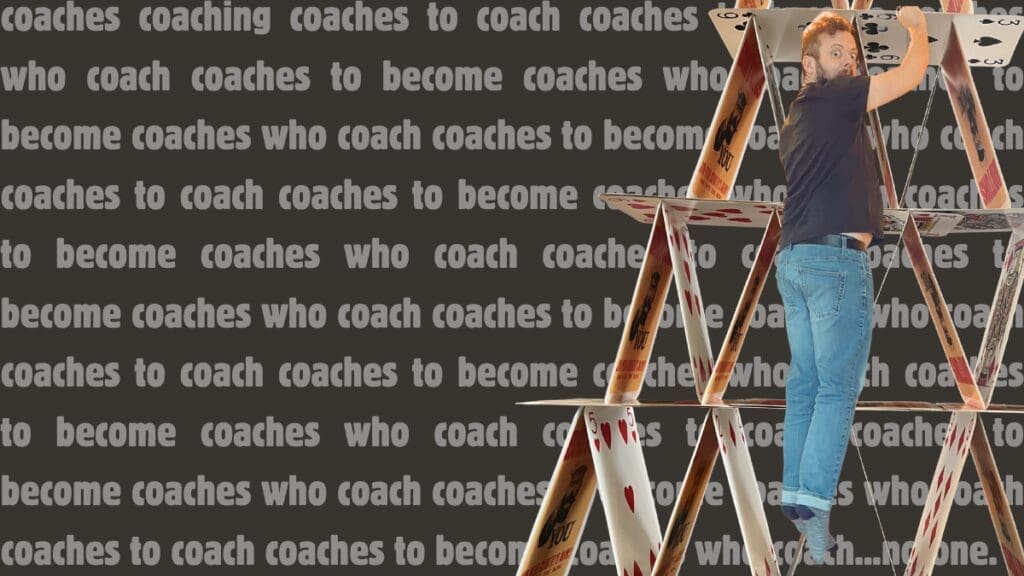
The framing of that post somewhat mischaracterises the argument it’s pushing back against. The issue isn’t “coaches teaching coaches to coach.” I mean, who better to become a teacher than the person who knows how to do the thing they are teaching? I’ve not seen anyone seriously complaining about that. Rather, when people refer to coaches coaching coaches to coach more coaches to become coaches, they are describing something different.
Having gone through an 18-month ICF-affiliated training programme myself, I often watch parts of the industry with my head in my hands. Not least because it is still unregulated and anyone can call themselves a coach. So, it’s a world I have a love/hate relationship with. This episode hopefully demonstrates why I am sticking around (for now). But also why I have great concern about the way things are heading. And I would suggest it’s incumbent on ethical coaches to take the accusations seriously and help people get a sense of these distinctions.
When Coaching is Not a Pyramid Scheme
Of course, it’s not a pyramid if a less experienced coach goes to a more experienced one for coaching.
Someone builds experience over time. Another coach comes to them to address or develop something specific within their business or practice. Even if that coach specialises in working with coaches, those coaches will have their own ways of working, usually with clients across a range of situations. For example, coaches work with people in sport, business, the arts, career development, etc.
This is how knowledge and skills spread within a field. Very normal. Coaching can be really valuable as a structured partnership that helps the client make progress on their terms. Not by telling them what to do, but by helping them identify their desired outcome. And then asking questions to help them get clear on the steps they want to take as well as preparing for potential obstacles they might anticipate along the way.
When Coaching DOES Look Like a Pyramid Scheme
What, then, is this pyramid of coaches coaching coaches to coach coaches? How is it different?
Sixteen years ago, when I started my blog and podcast, I remember many online entrepreneurs giving away e-books and selling courses to teach people to build a dream lifestyle business. They dangled freedom from employment and four-hour workweeks, and shot their videos on beaches and in mountain-side cabins, to attract an audience to their webinars. Like Influencer Culture today, they would promise an easy-to-follow blueprint to guarantee followers the same success.
These individuals taught others how to create and sell digital products that taught people how to create and sell digital products that taught…yes, you get the point. There was no meaningful substance anywhere in the chain. The money made came from aspirational marketing that shaped perceptions, sold appealing promises, and used smoke and mirrors to persuade people it was a quick route to material wealth.
This is exactly what we have witnessed happen in corners of the online coaching world. It targets individuals, encouraging them to believe that becoming a coach is a quick route to financial prosperity or to escaping material insecurity. They are sold a blueprint for convincing others of the potential wealth of becoming a coach who shares the same process with them, so on and so forth until the supply of potential clients runs dry.
Coaching Is Never a One Size Fits All Solution
Even for coaches who find their own niche, you can tell when this sort of pyramid model is at work because they coach people to become coaches. Treating every problem with the same solution. A “relationship coach” may end up with many clients becoming coaches themselves. A “career coach” has a disproportionate number of people pivoting to follow in their footsteps in building a coaching business rather than being coached to identify and follow their own path.
It concerns me when I see a coach describing how their clients have succeeded in the same ways they did. That is a dereliction of what I see as the purpose of coaching: to support each individual in defining success on their own terms and navigating their unique path towards it.
Identifying Pyramid Schemes in the Coaching World
How can we assess whether a coaching environment is genuine and meets our needs or those it supports? And how can we identify sources of exploitation and extraction in the coaching industry?
Does it Create Dependency?
In a healthy structure, the value is evident in the client’s life. They see shifts in the area they worked with a coach to address. For example, development of leadership skills, a clear path for their planned career pivot, or forward momentum with a personal project etc.
In a pyramid structure, the value is cyclical. Success is often based on copying and reusing the coach’s business model and tools. Especially if the original coach earns affiliate commissions from their client’s future business, which frequently happens when they’ve been sold a specific model or framework to build their business around.
It’s a big red flag if your coaching credentials rely on your continuous connection to the coach (such as paying for rights, licences, etc.), and the certification lacks legitimacy outside the bubble where you trained.
Does it Restrict Outcomes and Definitions?
Another red flag is a testimonial list where every client looks like a carbon copy of the coach. Solid and ethical coaching acts as a prism, refracting unique objectives into results as diverse as the number of individuals being coached. A pyramid acts as a mould, pressing everyone into the same shape.
Does It Only Have One Solution?
Ethical coaching draws on a range of experiences and diverse training sources, enabling the coach to exercise initiative and treat every client according to their unique needs. Pyramid structures depend on insularity and a one-size-fits-all approach. If the coach’s sole credential is their success in producing more coaches in their own image, it raises serious concerns.
Over to You
I’d be interested to hear how this has shown up in your experience. Send me a message or leave a comment.