
Wandering on the edge of usefulness

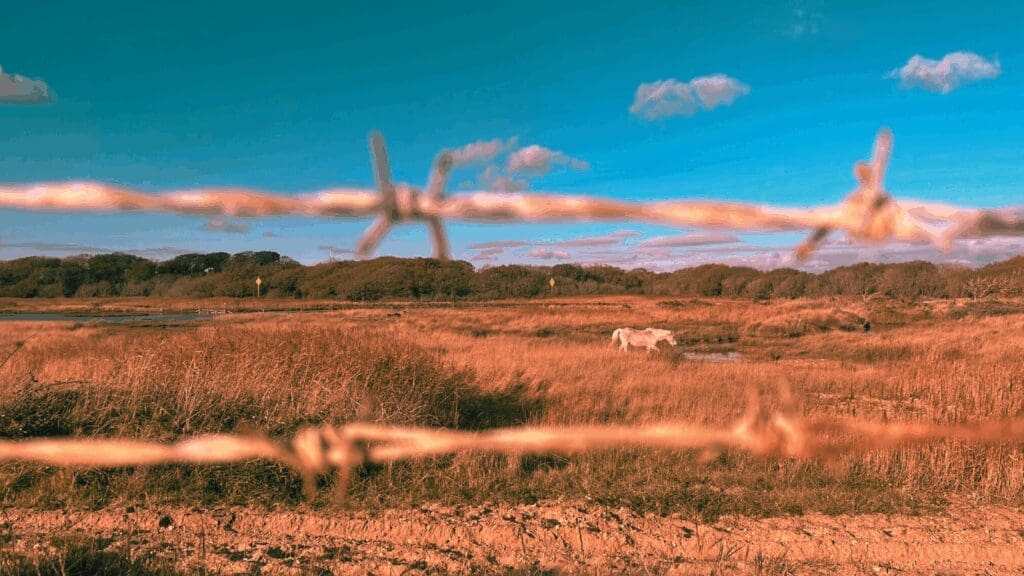
Have you ever noticed that you are still doing or using the same thing you did years ago, with no apparent reason?
Some things naturally reach the edge of usefulness once their work is complete. Others find a use when we keep them in the borderlands, waiting for the time they might find a place.
These Notes From a Slow Coach emerged from the question we explored in last week’s Journal Circle: How do you know when an idea has reached the edge of its usefulness?
I initially read this as the “end” rather than the “edge” of usefulness, which had a surprisingly contaminating effect on my response at first. The end of usefulness implies a beginning. And as we explored later in the week, some ideas sit on the edges of life BEFORE they connect and find a place to fit later.
Holding Ideas In The Margins
We might evaluate something’s usefulness by recalling why we initially used it. Whether it’s a practical tool, method or model, an institution, a person, a belief, or a value, it likely served a need or purpose. Asking myself why I chose this (if I did), and what made it the right idea at the time, can help reconnect me with my earlier perspectives before they were lost to habit, noise, or familiarity.
Is the original purpose still present? Does it still hold water? Perhaps it has changed. Maybe circumstances have shifted, or the ground beneath my feet feels different now. What is the terrain like here at the edge of usefulness?
Does it broaden my world or narrow it? Is it helping me feel more at peace with myself or more pressured to become something else? Does this feel nourishing and sustaining, or am I holding onto it to avoid the discomfort of letting go? Does it invite space for new possibilities or leave me circling the same area?
It might not mean this idea is useless, but that I need to recalibrate my approach because the way I used it previously is no longer effective. Or perhaps I have gained new information, experience, and skills that I can now apply and connect. Those dormant pieces, resources, and ideas at the margins are ready to be integrated.
Perhaps it was useful at the time, but it’s no longer relevant. It can be put aside again. Stored away, maybe an opportunity will arise again in the future and return. There’s a rhythmic, seasonal, circular pattern to things rather than a straight line with the conclusion of usefulness, dropping off the end of the proverbial conveyor belt.
The Liminal Borderland
A Haven member described this beautifully. The edge is where certain ideas reside: creative nudges, surging desires, and thorns that catch the sleeve of our attention. They are not immediately useful, but they are present, seeded, worth noticing, and allowed to exist in the edges. They are not a core focus nor something to impose meaning upon.
And we can return to these borderlands, wandering through them, seeing what is planted here. Letting ideas rest, root, and reveal themselves in time.
This echoes a coaching conversation I had a couple of years ago about distinguishing between not for now, not yet, and not for me.
Many of us are pulled towards interests, pursuits, and desires. It isn’t easy to know which ones we should give ourselves to. We might spread ourselves too thin or become frozen in fear of choosing the wrong one.
Is it possible to filter these pulls?
- Not for now (something is important to me, but this is not the right time for it).
- Not yet (something is important to me, and the time is coming – perhaps I need to prepare for when it arrives).
- Not for me (something is important to me, but I am not the person to do it – I hope it finds someone who is).
Supporting From Below
In The Haven, we sometimes talk about the difference between support from above and below. The difference between being held by someone or something that provides safety as we engage with things that matter, and being instructed or told what to do by someone or something else.
I recently spoke with Justin Sunseri about how, in his work as a therapist, he aims to become unnecessary. It’s the same in coaching. My goal is to take somebody as far as they want me to, which we define in the early stages of a coaching partnership.
This contrasts with the online marketing trends in much of the wellness and self-help world, where the goalposts shift in favour of market logic, which pulls us back from the edge of usefulness like we’re on a bungee cord, offering upsells, rebranded versions of old materials, and the pathologising of ordinary life as something to fix, and viewing being human as something to optimise and overcome without end.
When The Edge is an End
Letting go is not always easy. Recognising the edge and choosing to step away from something can be painful. Sensitive individuals often experience endings as relational ruptures rather than merely administrative decisions. We might feel attached to a person, a familiar practice, a habit, or a resource. Letting go of it can feel like a significant loss, even when we understand that the change is natural and necessary.
So how do we bring gentleness to these transitions?
For some people/situations, the most gentle thing they can do is shutting the door firmly and definitively. They’ve taken it as far as they can, tried, and diminished any potential future regrets from giving up too soon. At the edge of this situation, they realise they need a clean end and a fresh start.
For others, gentleness might be a more subtle shift without sudden change; a softened transition by welcoming and embracing what’s next. Facilitated through gathering and integrating elements in preparation for the upcoming season. As they do, the old things naturally fall away if they no longer fit.
This edge mirrors the natural erosion of a cliff, where things fall off not because they have been pushed, but because they are no longer part of the landscape.
Outgrowing and Moving On
Life moves in rhythms and seasons. We might outgrow things quietly, without drama, in ways that only become obvious once we recognise them.
Outgrowing something does not mean it is flawed. Everything has limits, parameters, and scope. It simply indicates that we have reached the edge where that thing is no longer helpful to us.
But nothing is wasted. We carry it with us, as something learned, developed, and understood. A nugget of wisdom. The clarification of a belief. All within the ever-evolving creative toolbox of life that we add to and draw from as we continue to be who we are forever in the process of becoming.
Over to You
How do you know when an idea has reached the edge of its usefulness? I’d love to hear from you in response to this. Feel free to drop me a message or share a comment on the YouTube video.
Sound Anchor
I made a sound anchor to accompany this reflection…