
Brainstorming Ideas and Questions With Mini-Zines

Other Platforms Apple Podcasts | Spotify | RSS | More Destinations
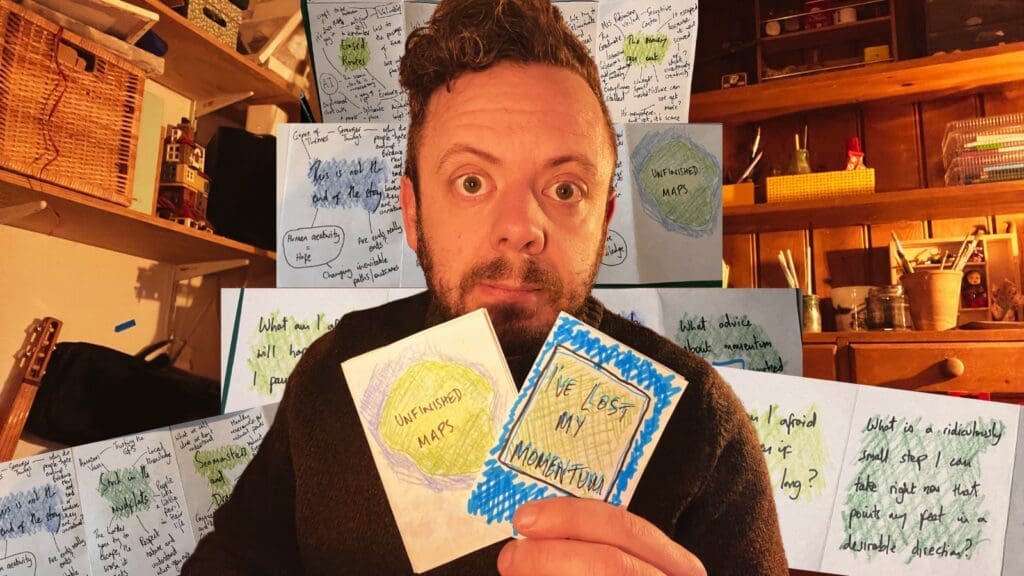
Here is a follow-up to my previous video, in which I explored how I use foldable mini-zines to generate creative ideas. This time, I share two specific approaches I’ve found helpful for brainstorming and expanding ideas.
The first is about expanding ideas in playful, often surprising ways. The second focuses on generating questions for personal inquiry, which I use to better understand and navigate challenges, decisions, and obstacles that leave me feeling stuck.
Whether you want a creative way to spend a few minutes, free up your thinking, or shake some stagnation out of a project, these practices are simple and adaptable.
Exercise One: Expanding Ideas From the Inside Out
This first exercise begins with a single prompt. The aim is to write one associated thought on each panel of a folded mini-zine. If you need instructions on how to fold and cut the mini-zine, watch the first video.
For my example, I’m using our current Haven theme, Unfinished Maps. You can use any topic at all. If you’d like to keep it light, just pick something in the room that catches your attention.
A standard mini-zine has 15 inside panels (not including the cover), leaving plenty of space to think literally, laterally, humorously, absurdly, or tenuously.
Phase One: Generate
Set a timer. Five minutes works well for me. It keeps me from overthinking while giving enough time to fill each panel. The aim is to let your first thoughts hit the paper without editing.
Write down whatever comes to mind, however surprising or unrelated it may seem. You might notice memories, old stories, or long-forgotten ideas resurfacing. Pay attention to how words sound. Is there a pun to be played with? Or an alternative spelling?
Phase Two: Expand
Once every panel has something on it, spend a few minutes building on each idea. I usually give 3–5 minutes per panel. Stay focused on the single idea in front of you rather than how it connects to the original theme. Let your mind make associations and see where they lead.
Phase Three: Bring It Home
If it feels useful, finish by reflecting. Hold each panel up against your original prompt and ask:
What stands out?
Are there patterns emerging?
Which threads feel alive?
What might be worth carrying forward?
You’re not forcing conclusions. You’re simply noticing what has energy.
That’s it.
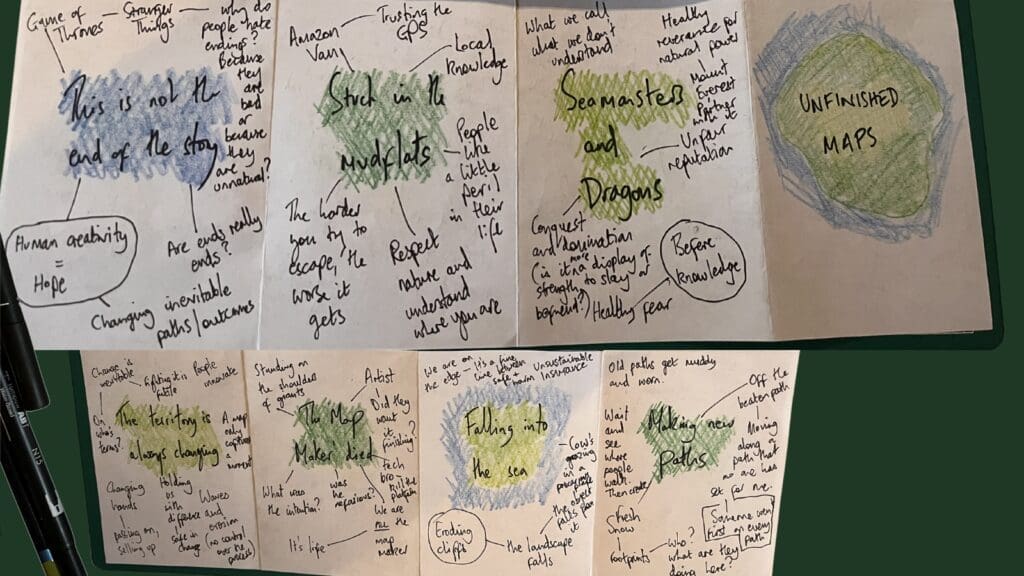
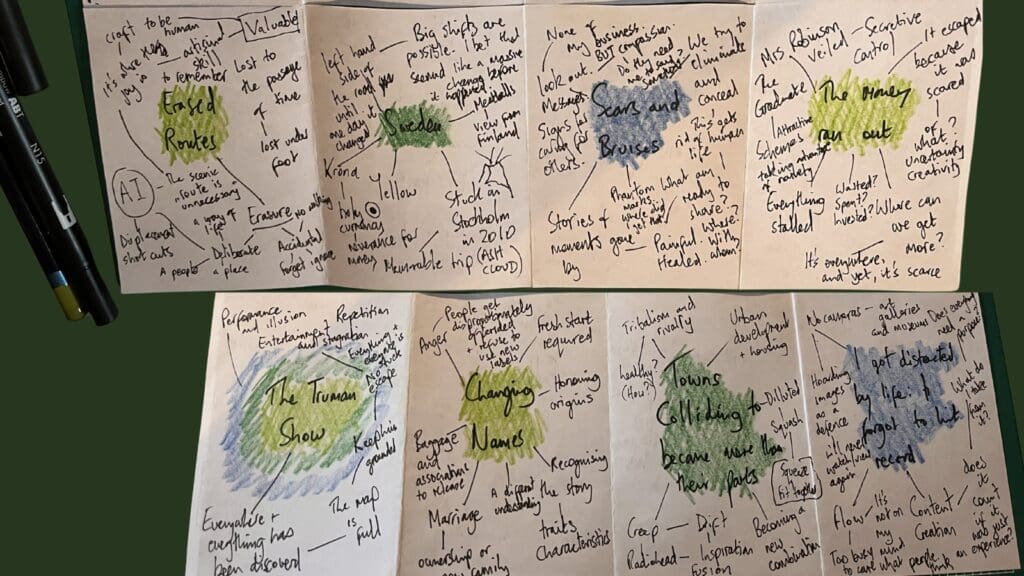
Here’s what came out for me…
Exercise Two: Brainstorming Questions for Personal Inquiry
The second exercise aims to help with brainstorming questions for personal inquiry. It’s especially helpful when you want to open up a line of questioning around something specific: for example, a decision, a challenge, or an area you want to explore more intentionally.
Questions are great for widening our perspective. They help us see familiar terrain from new angles.
My example prompt for this one is: I’ve Lost My Momentum.
As before, I fold a blank A4 sheet into a mini-zine and write the topic on the front.
This time, instead of filling each panel with ideas, I fill them with questions. I spend around 10–15 minutes generating one question per panel. These are questions I would genuinely love answers to.
Here’s what I came up with…
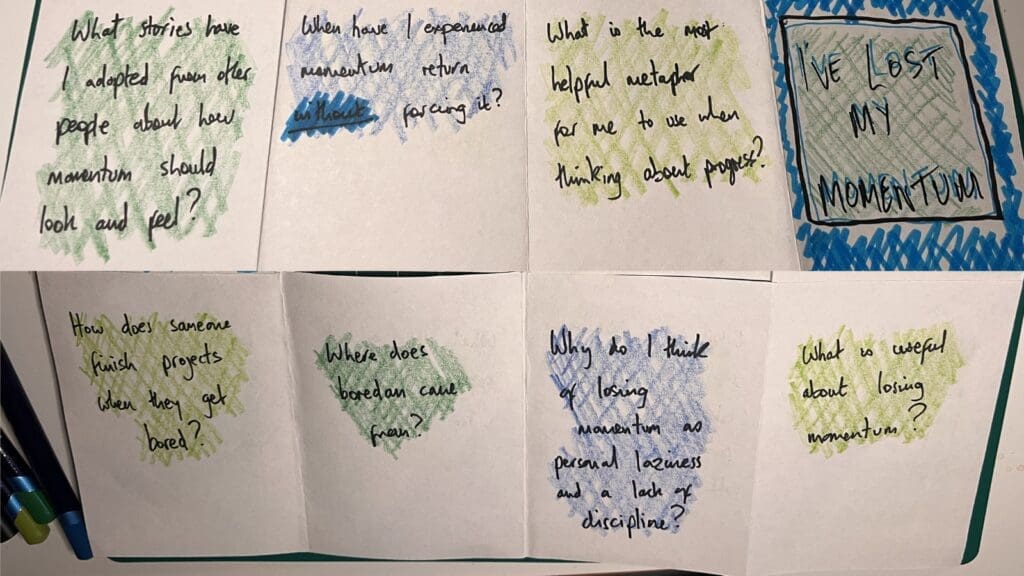
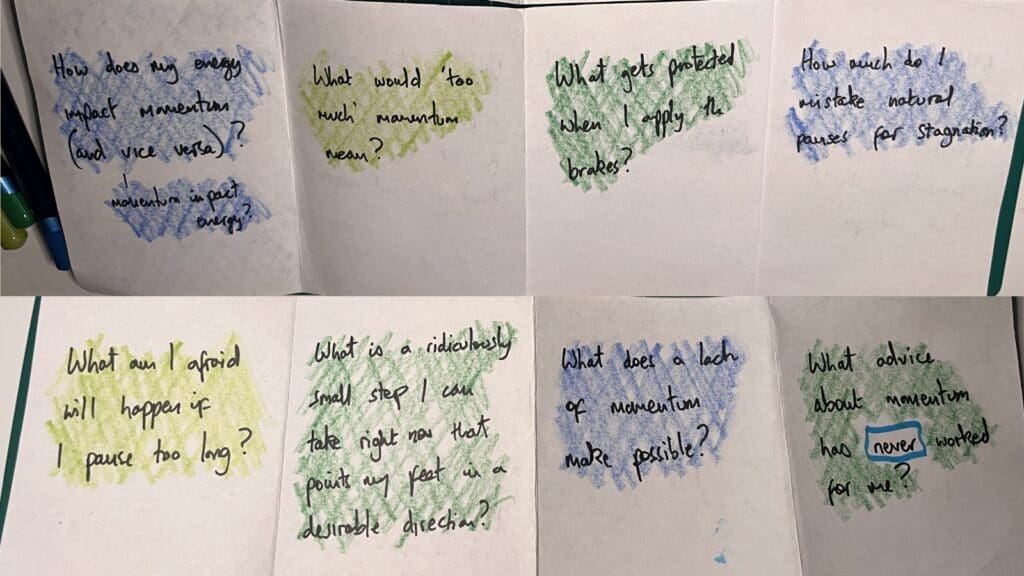
I enjoy this approach because it gives me up to two weeks of journal prompts on a single theme. After writing the questions, I usually refine them slightly so they feel open, clear, and relevant.
You can respond in whatever format suits you. I tend to bring one question into my morning journaling practice and see where it leads. It often feels like turning on a tap: insights connect, and new perspectives emerge naturally.
Play, Experiment, and Adapt
These exercises are shared as inspiration, not rigid instruction. They are methods I’ve found effective for expanding ideas and deepening personal inquiry, and I encourage you to adapt them to your own rhythms and preferences.
Notice what works and what doesn’t. Adjust the timing. Change the prompts. Make it more visual, more absurd, more structured: whatever suits you.
These are playful, exploratory processes. They aren’t outcome-driven or designed to guarantee a specific result. Often, the most valuable insights arrive as by-products: unexpected connections that emerge when given enough space.